
Verse Meaning
Psalm 20:7 Meaning
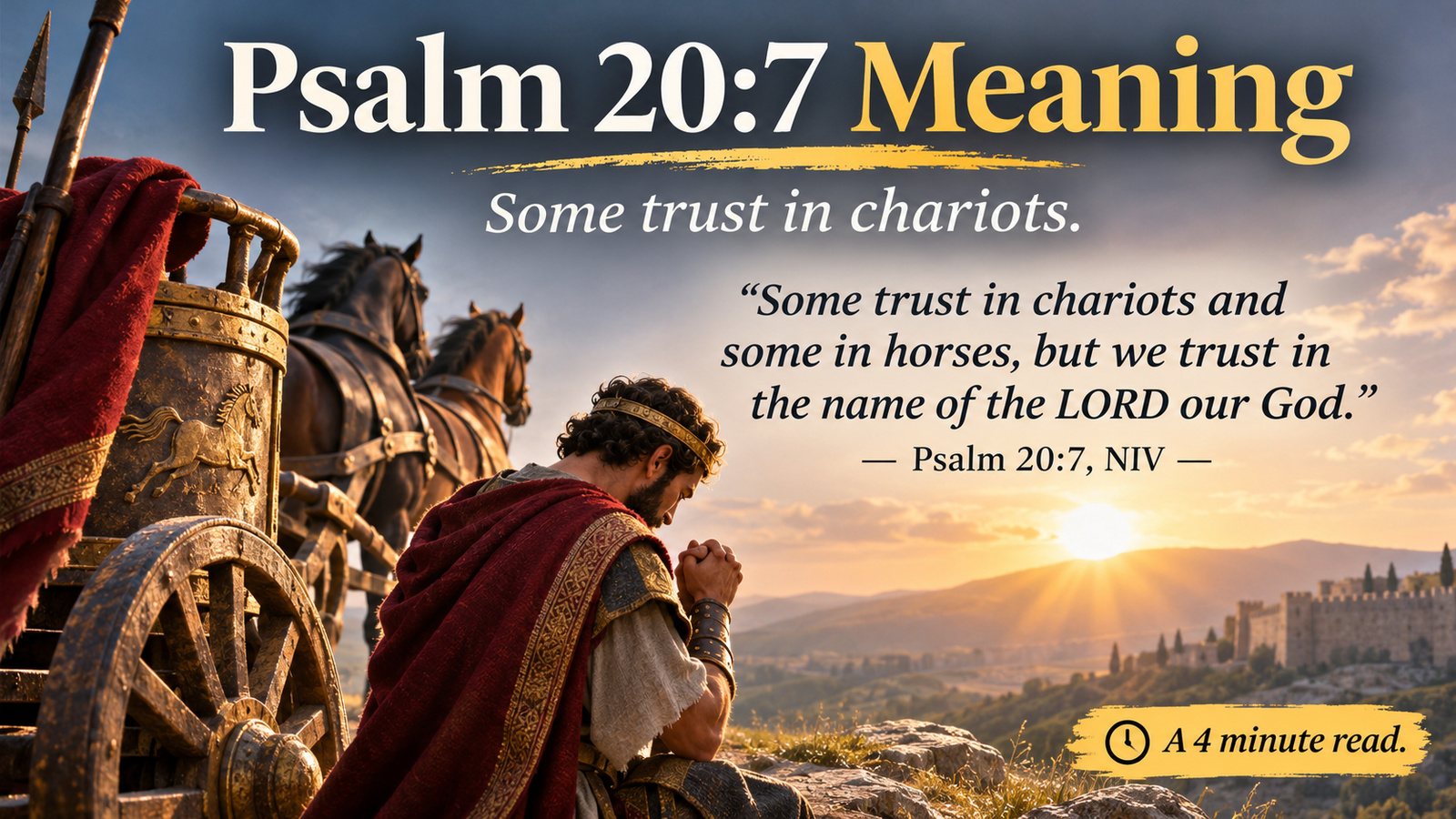
Some trust in chariots. A 4 minute read.
What Psalm 20:7 Says
"Some trust in chariots and some in horses, but we trust in the name of the LORD our God." (Psalm 20:7, NIV)
Psalm 20 is a psalm of David, written as a prayer for the king before he went out to battle. The people pray for their leader: "May he give you the desire of your heart and make all your plans succeed." (Psalm 20:4, NIV)
Then, in verse 7, they declare where their confidence really rests.
The Meaning in One Sentence
Psalm 20:7 means that God's people use every resource they have but rest their confidence in God alone, because He decides the outcome.
Phrase by Phrase
"Some trust in chariots." Chariots were the most advanced military technology of the ancient world. Egypt and the Canaanite kings had them. Israel, for much of its history, did not. A chariot army looked unbeatable.
"And some in horses." Horses meant speed, strength and the ability to strike first. God had told Israel's future kings not to pile them up (Deuteronomy 17:16), because He knew where a king's trust would drift.
"But we trust." The verse does not say "we have no chariots." It says the chariot is not where our trust goes. You can own resources without leaning your full weight on them.
"In the name of the LORD our God." In Scripture, God's name stands for His character and His covenant promises. To trust His name is to trust who He has shown Himself to be.
Why the Next Verse Matters
"They are brought to their knees and fall, but we rise up and stand firm." (Psalm 20:8, NIV)
The chariots fail. The people who trusted God are still standing. Proverbs says the same thing another way: "The horse is made ready for the day of battle, but victory rests with the LORD." (Proverbs 21:31, NIV)
Notice that the horse is still made ready. Preparation is wise. It just is not where your hope lives.
The Chariots We Trust Today
Few of us are tempted to trust literal chariots. But every leader has something that feels like one:
- Money in the bank or a strong balance sheet
- A title, a degree or a long track record
- The right connections and the right people on your side
- Data, systems and a well-built plan
- Your own talent, charm or work ethic
None of these are bad. All of them can fail. Jeremiah describes the difference: "But blessed is the one who trusts in the LORD, whose confidence is in him. They will be like a tree planted by the water that sends out its roots by the stream." (Jeremiah 17:7-8, NIV)
What It Looks Like for Leaders
At work. You prepare thoroughly, and then you pray before the big pitch, the hard negotiation or the launch, because the outcome is His.
In the community. You do not wait until you have enough resources to start. Small groups with little power have often done great things when they trusted God.
At home. You let your family see you pray about the job, the move and the money, not only plan for them.
In everyday life. When fear rises, you name the chariot you are tempted to lean on, and then you name the God you will trust instead.
A Simple Practice
Write down the one resource you lean on most when you are anxious. Next to it, write Psalm 20:7.
For the next week, each time you reach for that resource for reassurance, pause and pray the verse out loud.
A Closing Prayer
LORD my God, I confess that I trust my chariots more than I want to admit: my savings, my plans, my abilities and my connections. Thank You for every resource You have given me. Help me use them well without leaning on them. My hope is in Your name. When the things I trust fall, help me rise and stand firm in You. In Jesus' name, Amen.
Go Deeper
For a king who trusted God with an impossible threat, read The Letter on the Altar. For the courage to step out before you can see the way, read The Wet-Feet Mandate. For a companion verse on trust, see Proverbs 3:5-6 Meaning.
Facing something bigger than your resources? The Steward Leader app gives you biblical counsel for your exact situation, with NIV Scripture and next steps. Start your free trial.