
Verse Meaning
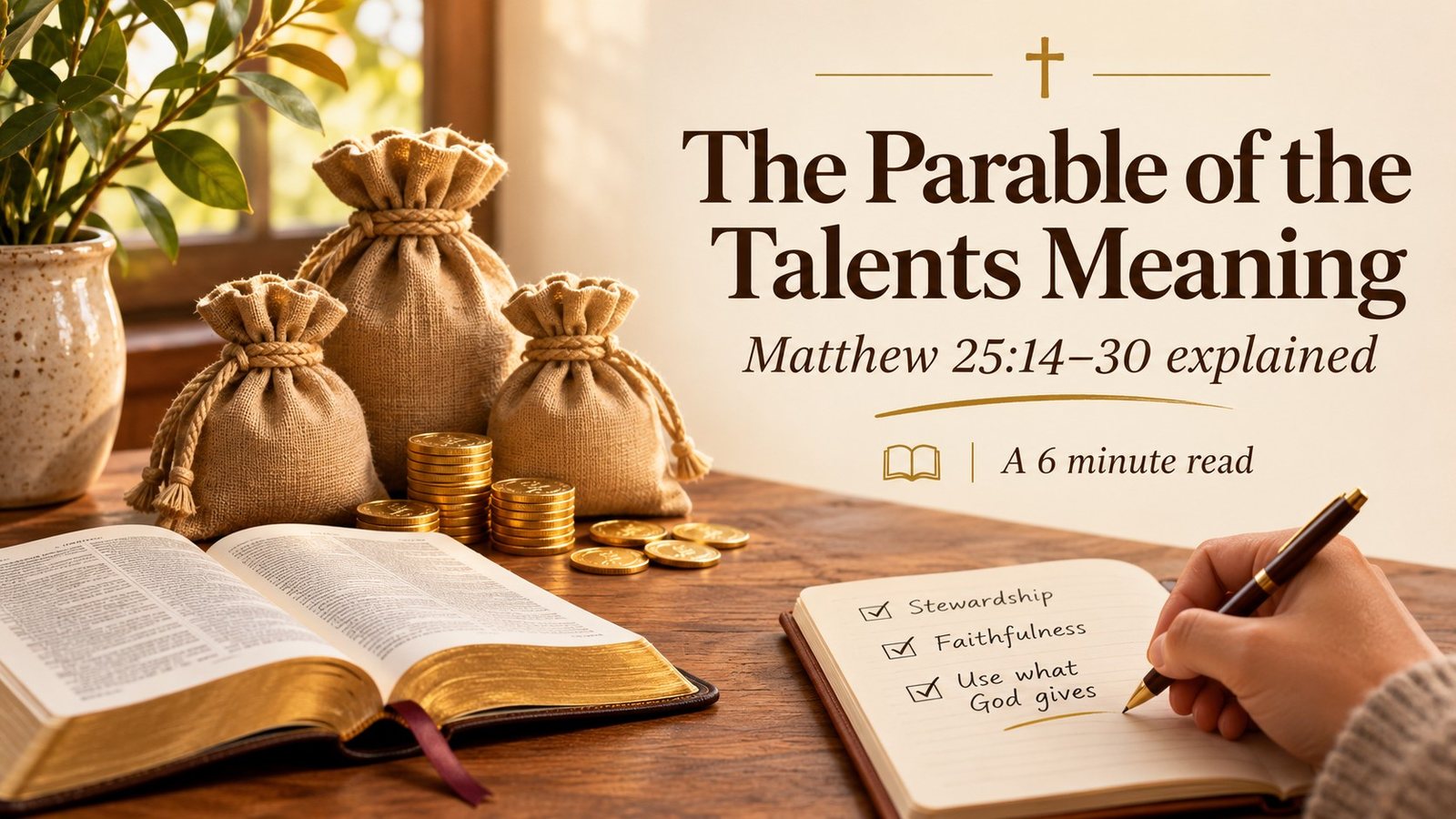
The Parable of the Talents Meaning
Matthew 25:14-30 explained. A 6 minute read.
What Matthew 25:14-30 Says
Jesus told this story during His last week in Jerusalem, just days before the cross. It opens like this:
"Again, it will be like a man going on a journey, who called his servants and entrusted his wealth to them. To one he gave five bags of gold, to another two bags, and to another one bag, each according to his ability. Then he went on his journey." (Matthew 25:14-15, NIV)
The first two servants put the money to work and doubled it. The third dug a hole and buried it. After a long time the master came back and settled accounts with all three.
The first two heard the same words: "Well done, good and faithful servant!" (Matthew 25:21, 23, NIV). The third was called wicked and lazy, and what he had was taken from him.
What Was a Talent?
Older translations say the master gave out "talents." The NIV says "bags of gold" to make the point clear: a talent was not a coin. It was a weight of silver or gold, and the NIV notes that one talent was worth about twenty years of a day laborer's wages.
So even the servant who received one bag was handed a fortune. No one in this story was given little.
Our English word "talent," meaning a natural ability, actually comes from this parable. Readers saw that the money stood for everything God places in our hands, and the word followed.
The Meaning in One Sentence
The parable of the talents means that everything you have is entrusted to you by God, that He expects you to put it to work for Him, and that one day He will ask what you did with it.
Four Things the Parable Teaches
1. It all belongs to the master. The servants never owned the money. Verse 14 says he "entrusted his wealth to them." That is the heart of stewardship.
2. The amounts were different on purpose. Each servant received "according to his ability" (Matthew 25:15, NIV). God does not hand everyone the same load. The servant with two bags received exactly the same praise as the servant with five. Faithfulness, not size, is what gets measured.
3. The master was gone a long time. "After a long time the master of those servants returned and settled accounts with them." (Matthew 25:19, NIV) Stewardship is not a sprint. It is daily faithfulness during a long wait.
4. There will be an accounting. The master returns, and every servant gives an answer. For the faithful, that day is not a threat. It is a celebration: "Come and share your master's happiness!" (Matthew 25:21, NIV)
Why the Third Servant Failed
The third servant did not steal anything. He did not waste anything. He returned every cent. So why was he condemned?
Listen to his own explanation:
"'Master,' he said, 'I knew that you are a hard man, harvesting where you have not sown and gathering where you have not scattered seed. So I was afraid and went out and hid your gold in the ground. See, here is what belongs to you.'" (Matthew 25:24-25, NIV)
His problem started with a false picture of his master. He believed the master was harsh, so he was afraid, so he played it safe. Fear produced inaction, and inaction with someone else's resources is unfaithfulness.
That is the warning for us. Many people bury what God gave them, not because they are wicked, but because they are afraid of failing, afraid of being seen or afraid of a God they imagine to be hard to please.
Where the Parable Sits in Matthew 25
Matthew 25 holds three stories about the return of Christ. The ten virgins (verses 1 to 13) teach readiness. The talents (verses 14 to 30) teach faithful work while we wait. The sheep and the goats (verses 31 to 46) show what that work looks like: feeding the hungry, welcoming the stranger and caring for the sick and the prisoner.
Read together, they say that waiting for Jesus is not passive. It is busy, generous, openhanded work.
What It Looks Like for Leaders
At work. You take wise risks with the resources in your care instead of protecting your position. You develop the people on your team rather than keeping them small so they never outgrow you.
In the community. You use your skills, network and voice for others. The question is not "Do I have enough to make a difference?" It is "What have I been handed, and am I using it?"
At home. Your children are among the greatest trusts you will ever carry. Investing in them takes time and attention, and it pays a return you will see for generations.
In everyday life. Name the thing you have buried. A gift you stopped using. A calling you shelved. A generosity you keep postponing. Dig it up.
Common Questions
Is the parable of the talents about money or about abilities? Both, and more. The story uses money, but Jesus is talking about everything the Master entrusts to His servants: abilities, time, opportunities, relationships, resources and the gospel itself.
Is this the same as the parable of the minas in Luke 19? They are similar but not the same. In Luke 19:11-27 each servant receives the same amount, one mina, and the returns differ. In Matthew 25 the amounts differ and the faithful servants both double theirs. Together they teach that God measures both what you were given and what you did with it.
Does the parable teach that we earn salvation by our works? No. The servants did not earn the bags of gold. They received them. Faithful work is the fruit of a relationship with a good Master, not the price of one.
A Simple Practice
Take a sheet of paper and draw three columns: gifts, resources and opportunities. List what God has placed in your hands in each one.
Then circle one item you have been burying and write down a single step you will take this week to put it to work.
A Closing Prayer
Master, everything I have came from Your hand. Forgive me for the gifts I have buried out of fear. Show me who You really are, so that I can serve You with courage instead of dread. Help me put to work what You have entrusted to me, so that when You return I will hear You say, "Well done." In Jesus' name, Amen.
Go Deeper
For the full teaching on this parable and the fear behind the buried bag, read What Fear Buries. For more on the master's words to the faithful servants, read Well Done, Good and Faithful Servant: Meaning. For the bigger picture, see What Is Biblical Stewardship? and these Bible verses about stewardship.
Wondering how to put your gifts to work right now? The Steward Leader app gives you biblical counsel for your exact situation, with NIV Scripture and next steps. Start your free trial.